The Emotional Architecture of Cultural Spaces
I entered the auditorium 90 minutes in advance on the day of my concert. There was silence everywhere. The seats were ready for its occupants, the stage riser being checked for its appropriate height, the mics waited for its artists to take stage. In the green room, the aroma and sound of filter coffee, the clanging of green room doors – open and shut – a hurried movement of organisers, the sound of audience whispering and taking their seats by then, the last minute distress call to an artist stuck in traffic, the continuous sound of the Tambura, sound check – these sounds occupied my head.
These sounds, which we hear on a daily basis, however become special sounds for an artist on the day of a concert, by setting the mood for the rest of the evening. Once the curtains open, we as artists on stage, sense a collective energy of expectation. As the concert begins, the ambient thoughts take a backseat and the entire focus is on one’s art, artistic delivery and audience.
Some cultural spaces exude warmth the moment we step foot in, some feel intimidating, and yet some instill the fear of appearing to be “elite” spaces and some instantly feel like “home”.
What is the physical and emotional labour that goes into establishing these environments, that spark a creative thought, creates a memory for the audience or inspire young musicians. Audiences primarily remember how they felt and were treated when they entered a space. They remember who accompanied them, the memories the venue evoked, what they looked for when they entered such a space for the first time, the first thoughts they chose to discuss with their inner circle about the space – be it navigating the traffic to reach the venue, non-availability of public transport for a senior citizen, or crispy hot bajjis in the canteen next door, or the mind-blowing manodharma of the artist performing that day. These also become important elements of the “infrastructure”, not just physical, but emotional infrastructure too.
Cultural workers create spaces, enabling artistic exchange and community participation, which audiences may often not notice. By cultural workers, I refer not only to artists, but also to the educators, organisers, volunteers, curators, technicians, administrators and community builders whose labour sustains cultural life and creates the conditions for meaningful artistic experiences.
These “enablers” spend years of their life navigating tensions and uncertainties, creating artistic spaces, developing communities, nurturing learners, preserving traditions, building systems, volunteering and creating conditions for promising futures. Yet, their contributions remain under-documented and not considered a typical “outcome” in the cultural sector, which are driven by numbers – number of concerts arranged, top-ranking artists brought in for concerts, social media reach, annual festivals and reports etc. Have we once paused and thought if all this would have been possible if not for the “invisible labour” that enables numbers to come into play.
Cultural spaces are often understood in the physical form – an auditorium, a “baithak” style home concert setting, temple courtyard, festival grounds, community hall, old age homes, educational institutions, and classrooms. Equally important is the emotional architecture that shapes how people remember, feel, connect and experience.
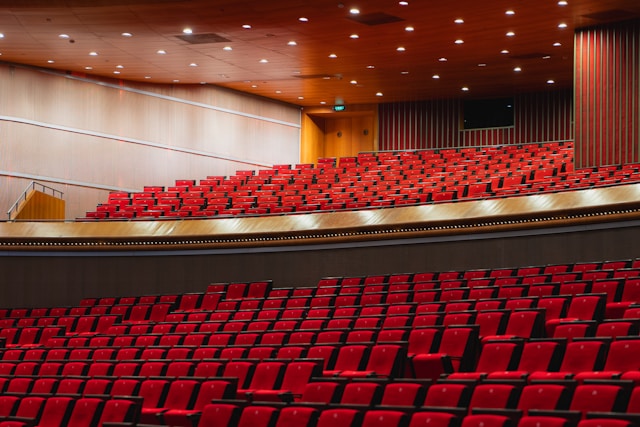
Image Courtesy: Unsplash
I have often wondered why people return to certain spaces after the programme ends. It might be perhaps influenced by what made them feel, seen, heard, connected, inspired in that space. People become loyal to certain spaces because it becomes an integral part of their personal story.
Diverse spaces reflect diverse emotions. In music classrooms, collective learning and listening creates a sense of oneness and trust, post a performance, art acts a catalyst for reflection, dialogue and empathy, collective anticipation in music festivals create a sense of community among strangers, community gatherings highlight a sense of comfort on seeing familiar faces. The Tiruvayyaru Tyagaraja Ardhana is a classic illustration. This tradition of goshti gayana (collective singing) brings in various feelings in the participants – for some it is an annual ritual, for some it is the comfort of being in the presence of hundereds of musicians, yet for some, it is a therapeutic and divine experience.
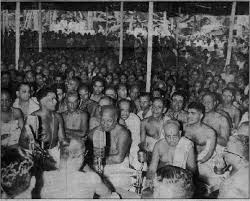
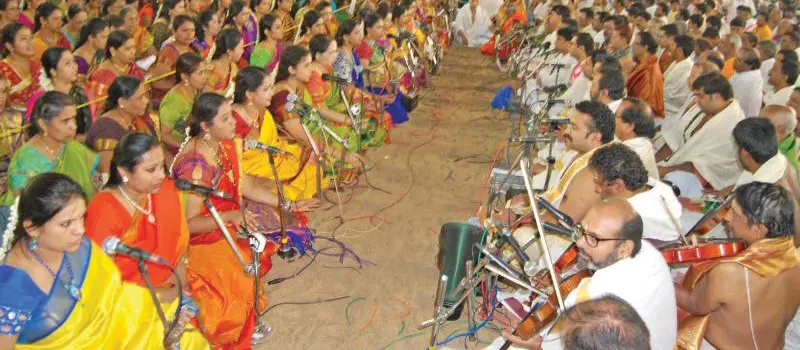
Image Courtesy: TamilNadu Tourism
These might be fleeting moments in a day, but for a cultural ecosystem, these become the foundation of the emotional architecture. Some of these might be tangible and visible, and some intangible and invisible, yet powerful and mandatory for a system to function.
This blog marks the beginning of the series of reflections from the field – observations, experiences, questions and stories gathered through cultural practice. This series explores what value cultural workers bring into our lives and make the “space” vibrant and alive.
Long after the concert has ended, audiences may forget the speeches, announcements, or even the exact sequence of compositions. What often remains is a feeling: the warmth of a welcome, the comfort of familiar faces, a meaningful conversation, or a brief interaction with an artist. These memories become part of the emotional architecture of cultural life. Perhaps that is what cultural workers build—not merely stages, programmes, and events, but conditions for connection, memory, and belonging.
Perhaps that is what cultural workers build—not merely stages, programmes, and events, but conditions for connection, memory, and belonging.
#Art #Music #CulturalWork #Cultural Spaces
 Krithika Sreenivasan